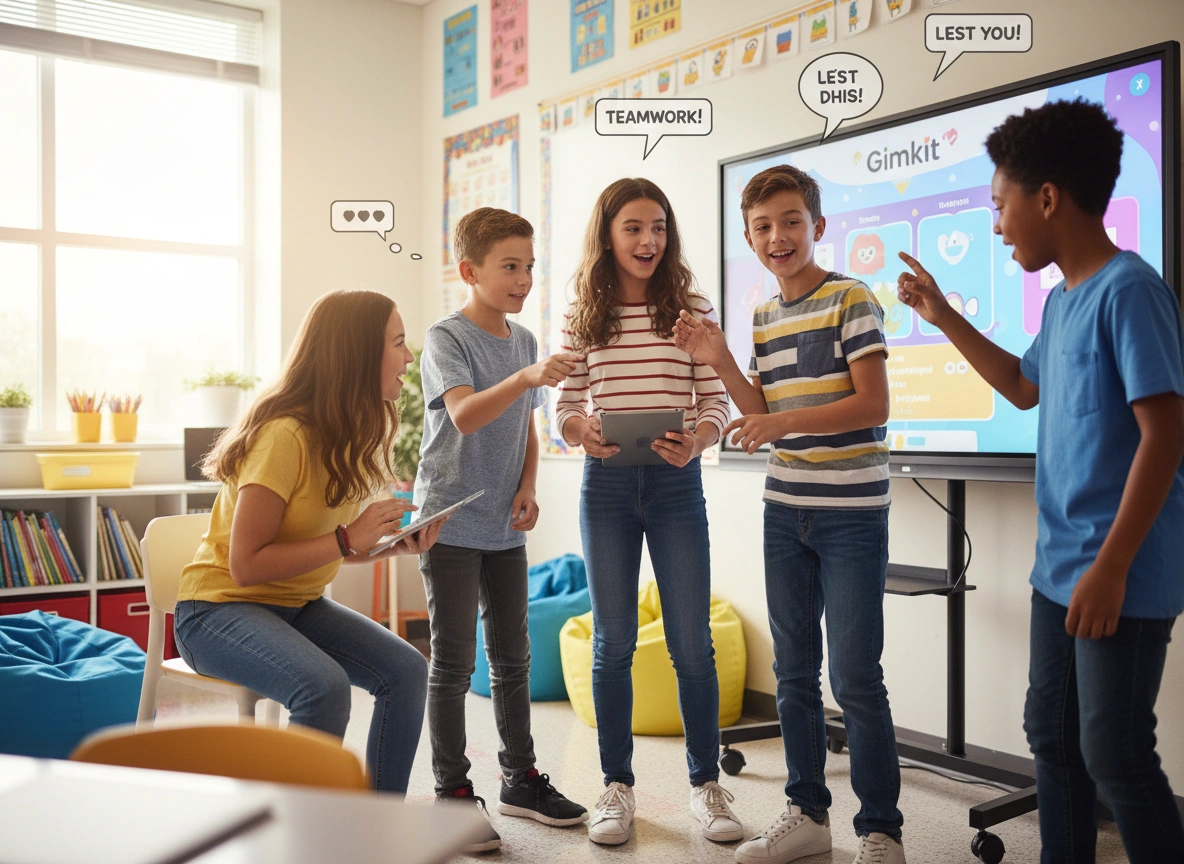
Traditional classroom environments often pit students against one another in a race for the highest grade. While individual achievement matters, modern education increasingly recognizes the immense value of collaboration. Students need to learn how to work together, solve problems as a unit, and rely on each other’s strengths. This is where Gimkit, a game-show-style learning platform, has carved out a unique niche. Unlike many quiz tools that focus solely on individual leaderboards, Gimkit offers distinct game modes designed to turn assessment into a cooperative mission.
This article explores how Gimkit transforms the classroom dynamic from competition to collaboration. We will examine the specific features that promote teamwork, the impact on student engagement, and practical ways teachers can leverage this tool to foster a community of learners.
The Shift from Competition to Cooperation
Educational technology often mimics the “sage on the stage” model, just in a digital format. A teacher asks a question, and students answer individually. The student who answers fastest and most accurately wins. While fun, this dynamic can alienate struggling learners and does little to teach social skills.
Gimkit was built differently. Created by a high school student who felt unengaged by traditional review games, the platform emphasizes strategy and economy. Students earn virtual currency for correct answers, which they can then invest in upgrades. This economic layer adds depth, but the real magic happens in Gimkit’s cooperative modes.
When students work toward a shared goal rather than a personal high score, the atmosphere changes. Anxiety lowers. Communication increases. The classroom becomes a team room where everyone contributes to the mission, regardless of their individual academic level.
Key Features That Promote Teamwork
Gimkit isn’t just a quiz; it is a suite of game modes, many of which are explicitly designed for collaboration. Here are the core features that drive this cooperative spirit.
Team Mode vs. Individual Mode
While you can play Gimkit individually (“Classic” mode), the platform shines when students are grouped. In Team Mode, students pool their earnings. This simple mechanic changes the incentive structure. A student who struggles with the content can still contribute by being cautious and avoiding money-losing mistakes, while stronger students can take risks to boost the team pot. They have to talk to each other to decide when to buy upgrades and which power-ups will benefit the group most.
“The Floor is Lava”
One of the most potent collaborative tools in Gimkit’s arsenal is the mode “The Floor is Lava.” In this cooperative survival game, the entire class must work together to keep a virtual structure built above rising lava. Correct answers build the structure; incorrect answers or inactivity allow the lava to rise.
If the class fails, everyone fails. If they succeed, everyone wins. This mode forces students to encourage one another. You will often hear students shouting encouragement like, “Keep answering, we need more blocks!” or “Don’t guess! Accuracy matters!” It creates a “us against the game” mentality rather than “me against you.”
“Trust No One” (Among Us Style)
Inspired by the popular game Among Us, this mode introduces social deduction into the learning process. Students are crewmates trying to run a spaceship by answering questions, but there are impostors among them trying to sabotage the mission.
While this includes an element of deception, it requires intense collaboration among the “crewmates.” They must communicate effectively, observe behavior, and reach a consensus to identify the impostors. It turns a vocabulary quiz into a high-stakes social negotiation where critical thinking and persuasion are just as important as knowing the course material.
Boss Battles
In a Boss Battle, the teacher (or a designated student) plays as the “Boss” against the rest of the class. The class must work together to deplete the Boss’s health bar by answering questions correctly. This mode unifies the students against a common “enemy.” It is excellent for building class morale and allows the teacher to model good sportsmanship and resilience.
Impact on Student Engagement
When students collaborate in Gimkit, engagement goes beyond simply staring at a screen. The social element acts as a force multiplier for attention and retention.
Peer-to-Peer Teaching
In competitive games, helping a neighbor is cheating. In collaborative Gimkit modes, helping a neighbor is strategy. Because the group’s success depends on the total output, students who master the material have a vested interest in helping those who don’t. This leads to organic peer-to-peer teaching moments. A student might lean over and explain, “The answer is ‘mitochondria’ because it’s the powerhouse,” ensuring their teammate gets it right next time so the team survives.
Increased Participation from Shy Learners
In a traditional classroom discussion, introverted students often remain silent. In a competitive game, they might give up if they fall behind early. Collaborative modes provide a safety net. The collective effort masks individual failure, reducing the fear of embarrassment. A quiet student can contribute significantly to the team’s currency or the class’s survival without ever being in the spotlight. This psychological safety is crucial for deep engagement.
Sustained Attention Through Strategy
Because Gimkit involves purchasing upgrades and power-ups, students must constantly discuss strategy. “Should we buy a multiplier now or save for insurance?” “Who has the streak bonus?” These discussions keep students focused on the game mechanics and, by extension, the learning content. They aren’t just answering questions; they are managing resources as a committee.
Practical Examples for the Classroom
Teachers can maximize the collaborative potential of Gimkit by structuring their lessons intentionally. Here are specific ways to use the platform to build teamwork.
The “Silent” Collaboration Challenge
Run a game of “The Floor is Lava” but add a constraint: students cannot talk. They must find non-verbal ways to coordinate or simply trust that everyone is doing their job. This variation highlights the difficulty of working without communication. Follow it up with a round where talking is allowed, and have the class reflect on the difference. This is a powerful lesson on the importance of clear communication in teamwork.
Assigned Roles in Team Mode
Divide the class into small teams (3-4 students). Instead of letting them play freely, assign roles.
- The Banker: The only person allowed to tell the team when to buy upgrades.
- The Runner: Checks the leaderboard and reports on rival teams (or the game status).
- The Scribe: Notes down difficult questions the group keeps missing.
By giving each student a responsibility, you ensure that collaboration is structured and that no single student dominates the group.
The Class Goal
Set a collective target for “Classic” mode. Tell the class, “If we can reach a collective total of $10 million in 10 minutes, there will be no homework tonight.” This unifies the entire room. You will see stronger students coaching others on which upgrades to buy to maximize the class total, fostering a strong sense of community.
Benefits for Academic and Social Development
The benefits of using Gimkit collaboratively extend far beyond reviewing for a test.
Social-Emotional Learning (SEL)
Collaborative gaming provides a controlled environment to practice essential social skills. Students learn to negotiate, manage frustration when a teammate makes a mistake, and celebrate collective victories. They learn that their individual contribution, no matter how small, is part of a larger picture. This fosters empathy and patience—skills that are critical for their future personal and professional lives.
deeper Cognitive Processing
When students have to explain their reasoning to a teammate to decide on an answer or a strategy, they engage in metacognition. They are thinking about their thinking. Articulating why an answer is correct cements the knowledge more effectively than simply clicking a button. The economic strategy aspect also requires critical thinking and long-term planning, activating different parts of the brain than simple recall.
Building a Positive Class Culture
A classroom that plays together stays together. Shared experiences, especially those involving the high-energy excitement of a close Gimkit match, build bonds. When a class successfully survives “The Floor is Lava” with only seconds to spare, the collective cheer creates a shared memory. This positive emotional association with the classroom environment makes students more willing to take academic risks and participate in future lessons.
Conclusion
Gimkit is more than just a colorful review tool; it is a platform that understands the social nature of learning. By shifting the focus from individual glory to collective success, it encourages students to communicate, strategize, and support one another.
For educators, the goal is not just to transfer knowledge but to build capable, collaborative human beings. Using Gimkit’s cooperative modes allows teachers to achieve both. It turns the often solitary act of test-taking into a community-building exercise. As students work together to keep the lava at bay or defeat a Boss, they are learning the most valuable lesson of all: we are smarter, stronger, and more successful when we work together.
Please visit website for more info
