
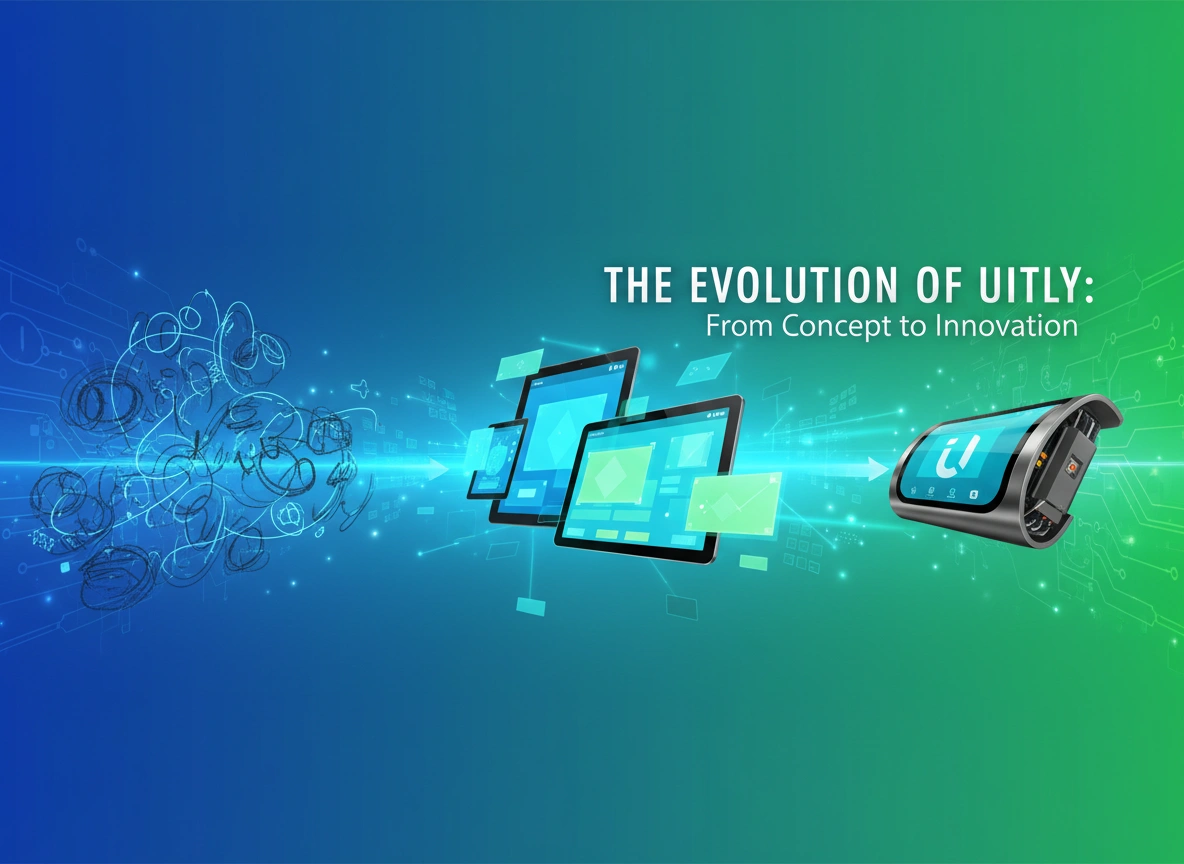
Every groundbreaking platform begins as a flicker of an idea—a “what if” moment that refuses to go away. For Uitly, that moment wasn’t just about creating another digital tool; it was about reimagining efficiency in a saturated market. The journey from a rough sketch on a whiteboard to a comprehensive innovation ecosystem is a testament to resilience, strategic pivoting, and an unyielding commitment to user-centric design.
This article explores the trajectory of Uitly, dissecting the decisions that shaped its path and the innovations that now define its success. We will examine the initial vision, the hurdles cleared, and the future that awaits this dynamic platform.
The Genesis: A Vision for Streamlined Connectivity
The story of Uitly began with a simple observation: fragmentation kills productivity. The founders noticed that businesses and individuals were juggling too many disparate tools to accomplish simple workflows. Data silos were the norm, and cross-platform compatibility was often a clumsy afterthought.
The initial concept for Uitly was to build a “connective tissue” for the digital workspace. The vision wasn’t to replace every tool a company used but to create a central nervous system where these tools could communicate fluently. The founders envisioned a platform where intuitive design met robust backend architecture, allowing users to orchestrate complex tasks without needing a degree in computer science.
Early brainstorming sessions focused heavily on “friction reduction.” Every feature proposed was measured against a strict metric: Does this remove a step? Does this save a click? This obsession with streamlining became the core DNA of the Uitly brand. It wasn’t just about doing things faster; it was about doing them with greater clarity and less cognitive load.
Charting the Course: Key Development Milestones
Turning a philosophy into a product requires a roadmap. Uitly’s development was characterized by several critical phases, each marking a significant leap forward in capability and maturity.
Phase 1: The Minimum Viable Product (MVP)
The alpha version of Uitly was raw but functional. Launched to a closed group of beta testers, it focused solely on core integration capabilities. It wasn’t pretty, but it proved the hypothesis: people were desperate for better connectivity between their legacy systems. This phase validated the market need and provided the initial data required to secure seed funding.
Phase 2: The UI/UX Overhaul
Feedback from the MVP phase highlighted a crucial flaw—power is useless without usability. The team pivoted to a design-first approach. They hired top-tier UX researchers to map user journeys. The result was the launch of Uitly 2.0, which featured the now-iconic dashboard interface. This milestone was pivotal because it transformed Uitly from a developer’s tool into a business solution accessible to managers and creative professionals.
Phase 3: Scaling the Infrastructure
As user adoption grew, the backend began to strain. The “Scalability Sprint” was a six-month period dedicated entirely to code refactoring and migrating to a serverless architecture. This milestone ensured that Uitly could handle enterprise-level loads without compromising speed, paving the way for larger corporate contracts.
Navigating Turbulence: Challenges and Solutions
No ascent is without its stumbles. Uitly faced significant headwinds that threatened to derail the project entirely.
The Integration Bottleneck:
Early on, Uitly struggled to keep up with the API updates of the third-party platforms it connected with. When a major partner changed their API protocol overnight, Uitly’s service went dark for 12 hours.
- The Solution: The team developed a proprietary “adaptive wrapper” technology. This middleware layer automatically detects API changes and adjusts requests in real-time, buffering the core system from external volatility. This turned a vulnerability into a unique selling proposition (USP).
Market Skepticism:
Entering a market dominated by established giants meant facing deep skepticism. Why trust a startup with critical data workflows?
- The Solution: Uitly doubled down on security certifications early. Achieving SOC 2 compliance and ISO 27001 certification far earlier than typical startups helped build trust. They also adopted a radical transparency policy, publishing their uptime and incident reports publicly. This honesty won over hesitant enterprise CIOs.
Talent Acquisition:
Finding developers who understood both legacy systems and modern cloud architecture was difficult.
- The Solution: Instead of competing with tech giants for senior talent, Uitly built an internal academy. They hired promising junior developers and paired them with senior architects in a rigorous mentorship program. This not only solved the staffing shortage but created a fiercely loyal and cohesive engineering culture.
Dissecting the Innovation: What Sets Uitly Apart
In a crowded marketplace, differentiation is survival. Uitly didn’t just iterate on existing ideas; it introduced features that shifted the paradigm of what integration software could do.
The “Smart-Link” Protocol
Most integration tools rely on rigid “if this, then that” logic. Uitly introduced “Smart-Link,” a machine-learning-driven protocol that observes user behavior and suggests optimizations. For example, if a user consistently moves data from a CRM to a spreadsheet every Friday, Smart-Link will eventually ask, “Do you want me to automate this weekly report?” It proactively seeks efficiency.
Visual Workflow Builder
While not the first to use visual coding, Uitly perfected the abstraction layer. Their drag-and-drop interface allows non-technical users to build complex logic trees involving conditionals, loops, and data transformations. What sets it apart is the “Under the Hood” view, which allows developers to toggle into the raw code of that visual block, offering the best of both no-code and pro-code worlds.
Decentralized Data Processing
Unlike competitors that route all data through a central cloud (creating privacy risks and latency), Uitly innovated with edge processing capabilities. Sensitive data processing can be configured to happen locally on the client’s server or device, with only the metadata syncing to the cloud. This architecture is a game-changer for industries like healthcare and finance where data sovereignty is paramount.
The Ripple Effect: Industry Impact
The release of these features didn’t just improve user metrics; it shifted expectations across the industry. Uitly forced competitors to rethink their user interfaces and their pricing models.
For Small to Medium Enterprises (SMEs), Uitly acted as a force multiplier. Small teams could suddenly operate with the automation capabilities of a Fortune 500 company. Case studies showed that marketing agencies using Uitly reduced their campaign setup time by 40%, while logistics firms used it to synchronize inventory across multiple warehouses in real-time, reducing stockouts by 25%.
Perhaps the most significant impact was on the “Citizen Developer” movement. By lowering the barrier to entry for complex automation, Uitly empowered HR managers, accountants, and sales directors to build their own solutions without waiting for IT approval. This democratization of technology sparked a wave of micro-innovation within organizations using the platform.
Future Horizons: What Lies Ahead?
As Uitly matures, the roadmap looks toward even deeper intelligence and broader ecosystems. The “evolution” is far from over.
AI-Driven Predictive Workflows:
The next frontier for Uitly is predictive automation. The R&D team is working on models that don’t just automate known tasks but predict necessary actions based on market trends. Imagine Uitly noticing a supply chain disruption in the news and automatically drafting emails to suppliers for alternative quotes—waiting only for human approval to send.
The Uitly Marketplace:
Plans are underway to open the platform further, allowing third-party developers to build and sell custom “modules” or “nodes” within the Uitly ecosystem. This shift towards a platform-economy model could exponentially increase the tool’s versatility.
Voice-Activated Enterprise Command:
Looking further ahead, Uitly is experimenting with Natural Language Processing (NLP) to allow voice-commanded workflow construction. The goal is to allow a user to say, “Uitly, when a new lead comes in from LinkedIn, check their company size, and if it’s over 50 employees, add them to the ‘High Priority’ Slack channel,” and have the system build that logic instantly.
Conclusion
The journey of Uitly serves as a blueprint for modern SaaS innovation. It highlights that success rarely comes from a single “eureka” moment, but rather from a continuous cycle of listening to users, confronting technical debt, and daring to simplify the complex.
From a fragile MVP to a robust engine powering thousands of businesses, Uitly has proven that the gap between concept and innovation is bridged by execution. As the platform looks toward a future of predictive AI and voice-driven interfaces, one thing remains constant: the commitment to removing friction.
For businesses looking to stay agile, the lesson from Uitly is clear: Don’t just digitize your problems; re-engineer your workflow. The tools of tomorrow are being built today, and Uitly is undoubtedly helping to lay the foundation.
Please visit website for more info
