
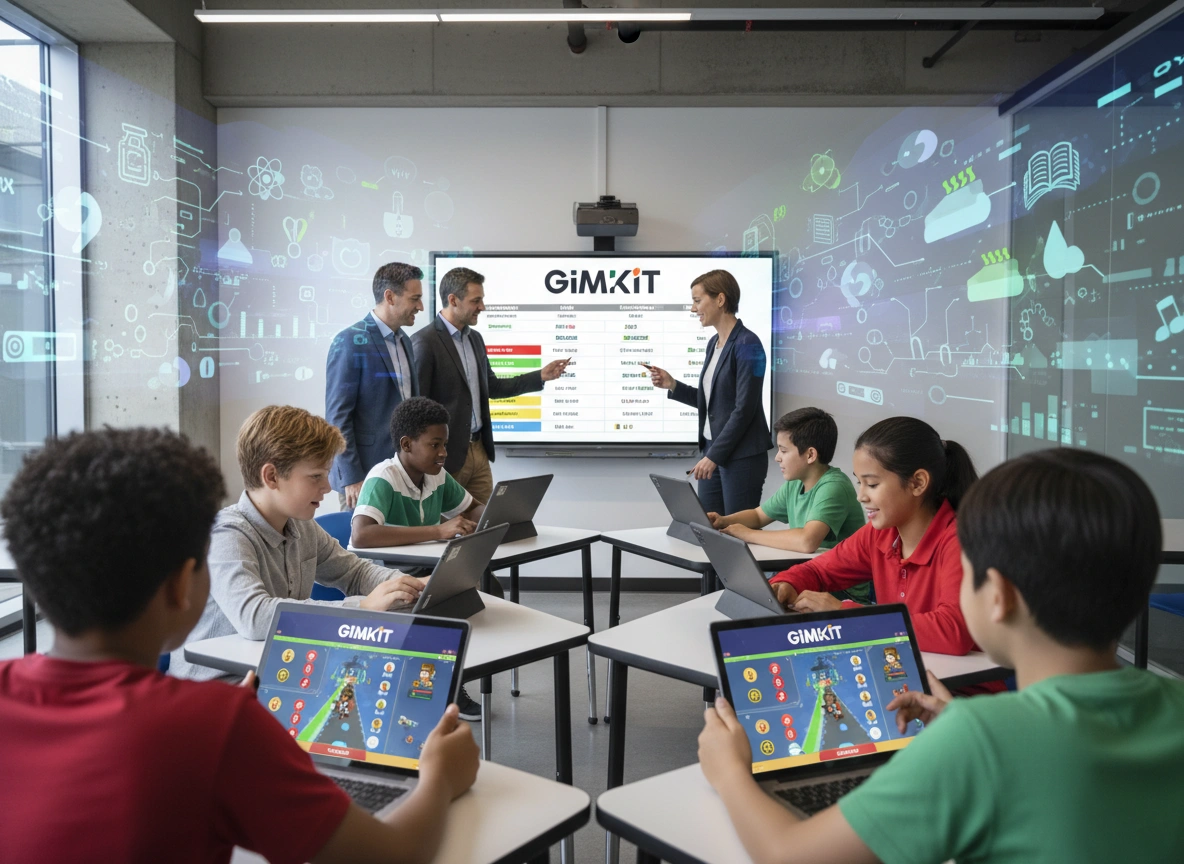
The landscape of modern education is undergoing a significant transformation, driven by technology that seeks to make learning more engaging, personalized, and effective. Among the new wave of digital tools, Gimkit has emerged as a noteworthy platform, capturing the attention of educators and students alike. This interactive game show-style learning platform is more than just a quiz tool; it represents a powerful integration of gamification, data-driven instruction, and student-centered learning. By examining its features, benefits, and alignment with current educational trends, we can understand the pivotal role Gimkit plays in the evolution of education technology.
Redefining Classroom Engagement Through Gamification
At its core, Gimkit is a live learning game that students play on their own devices. A teacher hosts a “Kit,” which is a set of questions on a particular topic, and students compete to answer questions correctly. However, what sets Gimkit apart is its unique economy-based gameplay. Instead of simply earning points, students earn in-game cash for correct answers. This cash can then be used to purchase upgrades, power-ups, and strategic advantages that influence the game’s outcome.
This simple yet effective model taps directly into the principles of gamification. Students are not just passively answering questions; they are making strategic decisions. Should they spend their cash on an upgrade that increases their earnings per question? Or should they buy a power-up that allows them to freeze a competitor’s screen for a few seconds? This layer of strategy transforms a standard review session into an exciting and dynamic competition. The result is a high level of engagement where students are intrinsically motivated to participate, learn, and master the content to improve their performance in the game.
The element of chance and strategy also levels the playing field. A student who may not be the fastest at answering questions can still win by making smart investments with their in-game currency. This design reduces the anxiety often associated with traditional testing and encourages persistence, as the game’s outcome is never certain until the very end.
Key Features and Benefits for Modern Educators
Gimkit offers a suite of features that directly address the needs of today’s teachers. The platform is incredibly user-friendly, allowing educators to create custom question sets (Kits) in minutes or import existing ones from other platforms like Quizlet. This ease of use lowers the barrier to entry for technology integration in the classroom.
The benefits extend far beyond simple engagement:
- Flexible Learning Modes: Gimkit is not a one-size-fits-all tool. It offers various game modes to suit different learning objectives. The classic live mode is perfect for whole-class review, while modes like “Trust No One” introduce social deduction elements similar to popular games like Among Us, promoting critical thinking and collaboration. Assignment modes allow teachers to assign Kits for homework, providing students with practice and reinforcement at their own pace.
- Formative Assessment Made Easy: Each game generates a detailed report for the teacher. This data provides immediate, actionable insights into student understanding. A teacher can quickly see which questions the class struggled with as a whole or identify individual students who may need additional support. This instant feedback loop is crucial for effective formative assessment, allowing educators to adjust their instruction in real time.
- Promoting Content Mastery: The repetitive nature of the game, where students are likely to see questions multiple times, reinforces learning. To succeed, students must not only know the correct answer but also recall it quickly and consistently. This repetition, framed within a fun and competitive context, helps move information from short-term to long-term memory.
Aligning with Key Educational Trends
Gimkit’s success can also be attributed to its strong alignment with several major trends shaping contemporary education.
1. Personalized Learning:
While the live game is a group activity, Gimkit supports personalization in several ways. In assignment mode, students work through question sets at their own pace, receiving immediate feedback on their answers. The platform’s algorithm ensures that students are re-exposed to questions they answered incorrectly, allowing them to focus on areas where they need the most improvement. This adaptive practice is a cornerstone of personalized learning, tailoring the educational experience to individual student needs.
2. Collaborative Learning:
Gimkit has evolved to include modes that foster teamwork and communication. Team Mode pits groups of students against each other, requiring them to pool their knowledge and earnings to succeed. The “Trust No One” mode requires students to communicate, form alliances, and use deductive reasoning to identify impostors. These modes move beyond individual competition and teach valuable soft skills like collaboration, strategic communication, and problem-solving, which are essential for success in the 21st century.
3. Data-Driven Teaching:
Modern educators are increasingly expected to use data to inform their teaching practices. Gimkit simplifies this process significantly. After each game, teachers receive an easy-to-read report that breaks down student and class performance. This data is not just a record of scores; it is a diagnostic tool. A teacher might notice that 80% of the class missed a specific question, signaling a need to reteach that concept. Conversely, if the entire class aces a Kit, the teacher knows they can confidently move on to the next topic. This ability to make informed instructional decisions based on real-time evidence is a hallmark of effective, data-driven teaching.
Real-World Applications and Impact
Across the country and around the world, teachers are integrating Gimkit into their classrooms with remarkable results. A high school history teacher might use it for a fast-paced review of key dates and figures before a unit test. An elementary science teacher could create a Kit with images to help students identify different types of rocks. A world language teacher can use it to practice vocabulary, with students racing to match words with their definitions.
Student feedback consistently highlights the platform’s appeal. They often describe it as “fun” and “addictive,” and many don’t even realize they are engaging in rigorous academic practice. This positive association with learning is perhaps Gimkit’s most significant contribution. When students are excited to review material, they are more likely to retain it. Teachers report increased participation, improved test scores, and a more positive classroom atmosphere on days when Gimkit is used.
The Future of Gimkit and Education Technology
As a platform created by a former high school student, Gimkit embodies the potential of designing educational tools with the end-user—the student—in mind. Its continued evolution, with regular updates and new game modes, suggests a commitment to staying relevant and responsive to the needs of the educational community.
The potential future impact of Gimkit on education technology is substantial. It serves as a model for how to successfully merge educational principles with engaging game mechanics. As technology becomes more integrated into the classroom, tools that can effectively capture student attention without sacrificing academic rigor will become increasingly valuable. We may see Gimkit and similar platforms incorporate more sophisticated technologies, such as artificial intelligence, to create even more personalized learning paths for students. The data collected could be used to predict student performance and provide proactive interventions.
In conclusion, Gimkit’s role in modern education technology is that of a catalyst. It is transforming traditional review and assessment into a dynamic, engaging, and data-rich experience. By leveraging the power of gamification, it motivates students, provides teachers with valuable insights, and aligns seamlessly with modern pedagogical trends like personalized and collaborative learning. As we continue to explore the intersection of technology and education, platforms like Gimkit demonstrate that learning can be both effective and enjoyable, paving the way for a more interactive and student-centered future in our classrooms..
Please visit this website for more info.
