
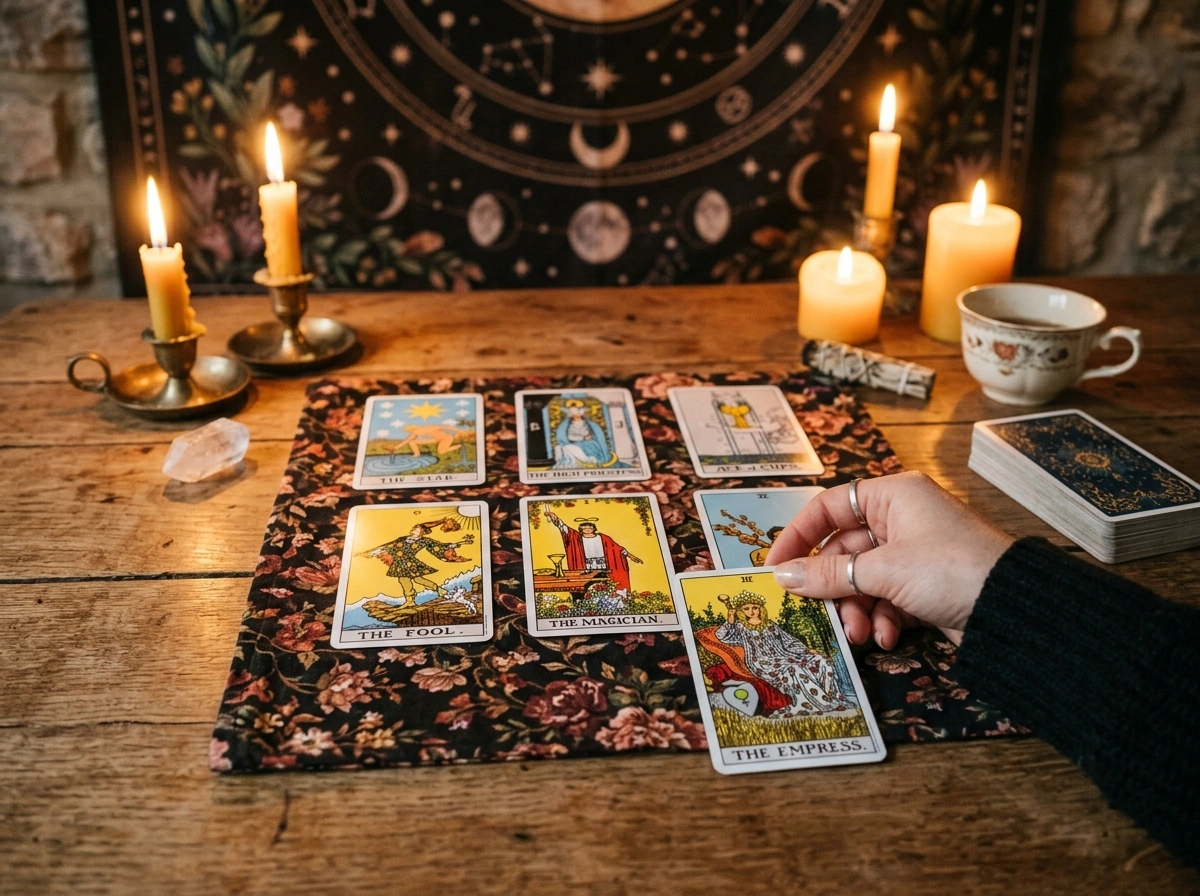
Curiosity about tarot is growing fast across the United States. From cozy apartments in Portland to busy lofts in Brooklyn, more people are shuffling a deck and asking what the cards might reveal. If you have ever felt drawn to those mysterious images but had no idea where to start, you are in the right place.
This guide breaks tarot down into simple, friendly steps. By the end, you will know how to choose a deck, understand the cards, and complete your very first three-card spread with confidence.
What Is Tarot Reading?
Tarot reading is the practice of using a deck of illustrated cards to reflect on your life, choices, and possibilities. Each card carries symbols and meanings that act like prompts for deeper thinking.
Think of tarot less as fortune-telling and more as a mirror. The cards do not lock your future in place. Instead, they help you pause, focus, and notice patterns you might otherwise overlook.
Many beginners use tarot for self-reflection, journaling, and gaining clarity during big decisions. There is no special gift required. With practice and an open mind, anyone can learn.
A Quick Look at Tarot History and Basics
Tarot cards first appeared in 15th-century Europe, originally as a card game for the wealthy. Over time, people began using them for reflection and spiritual exploration.
Today’s most popular deck style traces back to the Rider-Waite-Smith deck, published in 1909. Its clear, story-rich images made tarot accessible to everyday people, and it remains the go-to choice for beginners.
A standard tarot deck holds 78 cards, split into two groups:
- Major Arcana – 22 cards that represent big life themes.
- Minor Arcana – 56 cards that cover daily experiences.
Once you understand this structure, the deck feels far less intimidating.
How to Choose Your First Tarot Deck
Picking your first deck is exciting, but it can feel overwhelming with so many options online and in shops. Keep it simple.
Start With a Classic
The Rider-Waite-Smith deck is the most beginner-friendly choice. Its illustrations clearly show the meaning of each card, which makes learning much easier. Many modern decks are based on this same system, so the skills carry over.
Trust Your Instincts
Choose a deck whose artwork speaks to you. If the colors, characters, and style feel inviting, you will reach for it more often. You can explore beautiful decks and beginner resources at tarot to spark ideas.
Don’t Overthink the “Gift Myth”
You may have heard that a deck must be gifted to you. That tradition is charming, but it is not a rule. Buy your own deck without worry.
Understanding the Major and Minor Arcana
To read tarot, you need a basic feel for the two card groups. You do not have to memorize all 78 meanings right away.
The Major Arcana
These 22 cards represent major life lessons and turning points. Cards like The Fool, The Lovers, and The Tower point to powerful themes such as new beginnings, relationships, and sudden change.
When a Major Arcana card appears, it usually signals something significant in your reading.
The Minor Arcana
The 56 Minor Arcana cards reflect everyday matters. They are divided into four suits, each tied to a theme:
- Cups – emotions and relationships
- Pentacles – money, work, and the material world
- Swords – thoughts, conflict, and communication
- Wands – energy, passion, and creativity
Each suit runs from Ace through Ten, plus four court cards (Page, Knight, Queen, King). Once you connect each suit to its theme, interpretation gets much easier.
How to Prepare for Your First Reading
A little preparation sets the tone and helps you focus. You do not need candles or crystals, though you can use them if you enjoy the ritual.
Create a Calm Space
Find a quiet spot where you won’t be interrupted. Turn off notifications, take a few deep breaths, and let your mind settle.
Set a Clear Intention
Decide what you want to explore. A focused question works better than a vague one. Instead of “What will happen to me?” try “What should I focus on in my career right now?”
Shuffle With Purpose
Shuffle the cards while thinking about your question. There is no perfect technique. Shuffle until it feels right, then stop.
A Step-by-Step Guide to Your First 3-Card Spread
The three-card spread is the perfect starting point. It is quick, clear, and easy to interpret. We will use the classic Past, Present, Future layout.
Step 1: Shuffle and Focus
Hold your question in mind as you shuffle. When you feel ready, set the deck down in front of you.
Step 2: Draw Three Cards
Pull the top three cards and place them left to right.
- Card 1 (Past): Influences and events leading to now.
- Card 2 (Present): Your current situation and energy.
- Card 3 (Future): The likely direction if things continue.
Step 3: Turn the Cards Over
Flip them one at a time. Look at the images before reaching for the guidebook. Notice your first reactions.
Step 4: Read Each Card
Start with the Past card. What does it suggest about where you have been? Move to the Present card to understand your current moment. Finish with the Future card to see what may unfold.
Step 5: Tell the Story
Now connect the three cards into one short story. How does the past link to the present? Where does the future seem to lead? This narrative is the heart of your reading.
Tips for Interpreting the Cards
Interpretation improves with practice, but these tips will speed up your progress.
Trust Your First Impression
Before checking any reference, ask yourself what the image makes you feel. Your gut reaction often holds real insight.
Use the Guidebook as a Helper
Most decks come with a small booklet. Use it to confirm or expand your ideas, not to replace your own thinking.
Keep a Tarot Journal
Write down your question, the cards you drew, and your interpretation. Over time, you will spot patterns and watch your readings grow sharper.
Consider the Card Pairings
Cards influence one another. A challenging card softened by an encouraging neighbor tells a more balanced story than any single card alone.
Common Mistakes Beginners Should Avoid
Everyone stumbles at first. Watching for these common missteps will save you frustration.
Asking Yes-or-No Questions
Tarot shines with open-ended questions. “Yes or no” prompts limit the rich detail the cards can offer. Ask “how” or “what” instead.
Memorizing Without Understanding
Rote memorization rarely sticks. Focus on the themes and feelings behind each card, and the meanings will come naturally.
Reading Too Often
Pulling cards every hour about the same question leads to confusion. Give your readings room to breathe, and revisit a topic only when something changes.
Expecting Perfect Predictions
Tarot reflects possibilities, not guarantees. Treat it as guidance for reflection rather than a fixed forecast, and you will get far more value.
Comparing Yourself to Experts
Seasoned readers spent years building their skills. Be patient with yourself and celebrate small wins along the way.
Building Your Tarot Practice Over Time
Your first reading is just the beginning. As you grow comfortable with the three-card spread, you can try larger layouts and deeper questions.
Set aside a little time each week to practice. Read for yourself, jot notes in your journal, and slowly add more cards to your working knowledge. Consistency matters far more than speed.
You might also join online communities or local meetups. Sharing interpretations with others sharpens your skills and keeps the practice fun.
Final Thoughts
Tarot reading is a welcoming, rewarding practice anyone can learn. You do not need special powers or years of study to begin. All it takes is a deck you love, a quiet moment, and a curious mind.
Start with the simple Past, Present, Future spread, trust your instincts, and keep notes as you go. Each reading will teach you something new about the cards and about yourself.
So shuffle that deck, draw your first three cards, and enjoy the journey. Your tarot story starts now.
